Independent paddle catalogue · specs sourced, prices live
Pickleball Paddles: Compare 180+ by Spec, Price and USAP Approval
By Sukie Gao · Updated 2026-11-08 · How we research · We may earn a commission from links.
Short answer
Spend under $60 if you're trying the sport (one budget paddle or a two-paddle set), around $100 for a first paddle you'll keep (carbon face, 16 mm core, 7.6–8.2 oz), and $150 or more only once you know which shape you like. Weight, core thickness and shape are the specs that matter most. If you play sanctioned tournaments, check the exact model on the USA Pickleball approved list.
Your 6 best matches, and why
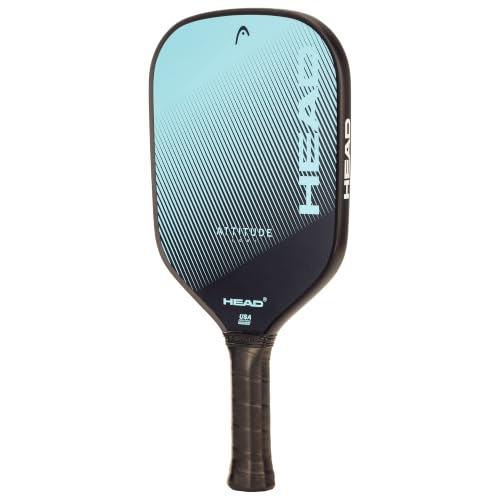
1.HEAD Attitude CORE
15 mm core · Widebody · 5 in handle · USAP listed
- Widebody shape: shorter and wider than an elongated paddle, so more face sits around the centre
- Under $60 per paddle, a sensible first purchase
- The maker describes it as beginner-friendly
2.Selkirk SLK Evo Control Max
7.6-8.1 oz · 16 mm core · Hybrid · 4.85 in handle · 4.25 in grip
- 16 mm core: the thicker end of the range
- Under $60 per paddle, a sensible first purchase
- Hybrid shape: between elongated and standard
- The maker describes it as beginner-friendly
3.niupipo Fiberglass Paddle SetSet of 2
7.8 oz · Widebody · 4.8 in handle · 4.3 in grip · No matching USAP entry found
- Widebody shape: shorter and wider than an elongated paddle, so more face sits around the centre
- Under $60 per paddle, a sensible first purchase
4.PRO-SPIN Boost FiberglassSet of 2
7.9 oz · 13 mm core · Widebody · USAP listed
- Widebody shape: shorter and wider than an elongated paddle, so more face sits around the centre
- Under $60 per paddle, a sensible first purchase
5.JOOLA Ben Johns Fiberglass Paddle SetSet of 2
6.8 oz · 13 mm core · Standard · 4.5 in grip · USAP: several similar entries, check the model
- Standard shape: shorter and wider than an elongated paddle, so more face sits around the centre
- Under $60 per paddle, a sensible first purchase
6.SONICORE CourtVibe T700 16mmSet of 2
16 mm core · No matching USAP entry found
- 16 mm core: the thicker end of the range
- Under $60 per paddle, a sensible first purchase
- The maker describes it as beginner-friendly


Specs are the makers' published figures (each paddle links its source). Prices from Amazon are as of 2026-11-13 and can change; we don't lab-test paddles. As an Amazon Associate we earn from qualifying purchases.
Pickleball paddles look alike on a store grid, and the specs that separate them (weight, core thickness, shape, grip size, face material) are rarely shown side by side. Pickle & Spin puts them in one catalogue: about 190 paddles and sets from 40 brands, taken from makers' own spec pages and from Amazon listings, every spec copied with its source and read date, Amazon prices refreshed daily, and a USA Pickleball status shown wherever we could match the paddle to the official list.
We don't lab-test or play-test paddles, so you won't find made-up power scores or spin numbers here. What you get instead is the published data, a finder that tells you why each paddle fits your answers, a lookup across all 5,400 paddles on the USA Pickleball approved list, a grip-size calculator and a short list of picks by need. If you're new, start with the finder. If you'd rather understand the specs first, the buying guide is below the picks.
The best pickleball paddles by need
1. Best first “real” paddle, around $100
Vatic Pro Prism Flash 16mm
The Prism Flash is the paddle r/Pickleball kept recommending as a first upgrade; one thread calls it "a meme on this sub". It pairs a raw T700 carbon face with a 16 mm core in a 16.2 × 7.7 in hybrid shape, and it is on the USA Pickleball approved list (added 05/20/2023). Vatic Pro publishes a 4.125 in grip and a 5.3 in handle but no weight, so check that before you buy.
Buy it if: Players a few sessions in who want one paddle to keep, in a hybrid shape that is neither elongated nor widebody. Skip it if: You need a published weight before you buy.
- Core
- 16 mm, Optimized C7 polymers and high-grade performance honeycomb
- Shape
- Hybrid (16.2 × 7.7 in)
- Handle
- 5.3 in
- Grip
- 4.125 in
- Face
- Raw Toray T700 carbon fiber with heat-compressed texturing
- USAP list
- Listed, added 05/20/2023
Specs: Vatic Pro product page (2026-11-08); Amazon listing (manufacturer/seller-supplied text) (2026-11-08); USA Pickleball Approved Paddle List entry 5074 (2026-11-08)
2. Best under $60
JOOLA Graf Edge 16mm
A big-brand raw carbon paddle in the under-$60 band: textured raw carbon face, 16 mm polypropylene honeycomb core, 7.8 oz, a 16.5 × 7.5 in elongated shape, 5.5 in handle and 4.125 in grip. It is on the USA Pickleball approved list (added 01/15/2025), which only about a third of the under-$60 entries in our catalogue are.
Buy it if: A first paddle on a tight budget that still meets tournament rules. Skip it if: You want a wider face; the elongated shape trades width for reach.
- Weight
- 7.8 oz
- Core
- 16 mm, polypropylene honeycomb
- Shape
- Elongated (16.5 × 7.5 in)
- Handle
- 5.5 in
- Grip
- 4.125 in
- Face
- textured raw carbon fiber
- USAP list
- Listed, added 01/15/2025
Specs: Amazon listing (manufacturer/seller-supplied text) (2026-11-08); USA Pickleball Approved Paddle List entry 10491 (2026-11-08)
3. Best first set for two
Selkirk SLK Neo 2.0 (set of 2)
Two graphite paddles at 7.5 oz each (light by our weight classes) with 13 mm polymer honeycomb cores, 5.25 in handles and 4.25 in grips, plus three outdoor balls and a sling bag. It matches Selkirk's 'Neo Graphite' entry, on the USA Pickleball approved list (added 06/01/2023); the registry name leaves out '2.0'.
Buy it if: Couples and families starting together who want a known brand rather than an unbranded set. Skip it if: One of you already plays weekly and wants a carbon face; this is a graphite starter set.
- Weight
- 7.5 oz
- Core
- 13 mm, polymer honeycomb (SX4)
- Handle
- 5.25 in
- Grip
- 4.25 in
- Face
- graphite (G4 Control Graphite Surface, SpinFlex Texture)
- USAP list
- Listed, added 06/01/2023
Specs: Amazon listing (manufacturer/seller-supplied text) (2026-11-08); USA Pickleball Approved Paddle List entry 5243 (2026-11-08)
4. Best for tennis converts
Selkirk SLK Halo Power XL
A 5.75 in handle, longer than most of the handles published in our catalogue, leaves room for a two-handed backhand; only a few paddles, mostly elongated models from Selkirk, Engage, 11SIX24 and Six Zero, go to 5.8–6 in. The face is 16.4 × 7.4 in elongated T700 raw carbon over a 13 mm core, at 7.7–8.0 oz. The maker registers several similar models; check the exact model on the official list if you compete.
Buy it if: Tennis and racquetball players who hit two-handed backhands and want to stay around $100. Skip it if: You play one-handed: a longer handle leaves less face length inside the same 17 in limit.
- Weight
- 7.7-8.0 oz
- Core
- 13 mm, Rev-Power Polymer Honeycomb
- Shape
- Elongated (16.4 × 7.4 in)
- Handle
- 5.75 in
- Grip
- 4.25 in
- Face
- T700 CarbonFusion Carbon Fiber; Raw Spin Technology
Specs: Selkirk product page (2026-11-08); Amazon listing (manufacturer/seller-supplied text) (2026-11-08)
5. Best premium elongated
JOOLA Ben Johns Perseus Pro IV 16mm
JOOLA's flagship elongated shape: 16.5 × 7.5 in, 8.1 oz, 16 mm core, textured carbon face, 5.5 in handle and a foam-injected edge wall the maker calls HyperFoam. It is on the USA Pickleball approved list (added 11/26/2024).
Buy it if: Weekly players ready to spend around $150 who want reach and a complete spec sheet. Skip it if: You want the widest face for blocking at the kitchen line; see the widebody pick.
- Weight
- 8.1 oz
- Core
- 16 mm, PP core + EVA foam wall
- Shape
- Elongated (16.5 × 7.5 in)
- Handle
- 5.5 in
- Grip
- 4.25 in
- Face
- Textured carbon fiber
- USAP list
- Listed, added 11/26/2024
Specs: JOOLA product page (2026-11-08); JOOLA Paddle Compare page (2026-11-08); Amazon listing (manufacturer/seller-supplied text) (2026-11-08); USA Pickleball Approved Paddle List entry 10354 (2026-11-08)
6. Best widebody, around $100
JOOLA Scorpeus Heat Vision 16mm
A 16 × 8 in widebody that spends the full 24 in size limit on width, at 7.8 oz with a 16 mm honeycomb core, textured carbon face and a thermoformed build. It is on the USA Pickleball approved list (added 07/18/2025). The listing title says 'Standard Shape', but its published dimensions are widebody.
Buy it if: Players who spend most points at the kitchen line and want the widest face available. Skip it if: You hit two-handed backhands; the handle is 5.25 in.
- Weight
- 7.8 oz
- Core
- 16 mm, honeycomb (bonded with SK film)
- Shape
- Widebody (16 × 8 in)
- Handle
- 5.25 in
- Face
- textured carbon fiber
- USAP list
- Listed, added 07/18/2025
Specs: Amazon listing (manufacturer/seller-supplied text) (2026-11-08); USA Pickleball Approved Paddle List entry 11671 (2026-11-08)
7. Cheapest set on the USAP list
Franklin Sports Pilot (set of 2)
The lowest-priced set in our catalogue with a matching entry: the Pilot is on the USA Pickleball approved list (added 04/15/2022). You get two fiberglass paddles with Franklin's MaxGrit surface and 10 mm polypropylene cores, plus four X-40 outdoor balls. The single Pilot lists 7.7–8.2 oz; the set listing gives no weight.
Buy it if: Trying the sport for under $60 with paddles that meet tournament rules. Skip it if: You want a carbon face or a published handle length.
- Core
- 10 mm, polypropylene
- Face
- fiberglass (MaxGrit surface)
- USAP list
- Listed, added 04/15/2022
Specs: Amazon listing (manufacturer/seller-supplied text) (2026-11-08); USA Pickleball Approved Paddle List entry 3883 (2026-11-08)


Product prices and availability are accurate as of 2026-11-13 and are subject to change. Specs are the makers' published figures; we don't lab-test paddles.
What do pickleball paddles cost, and what changes as the price rises?
Prices in our catalogue run from under $10 per paddle in the cheapest Amazon sets to around $350 for a flagship. The table splits all 187 entries into five bands. Below $60, sets and fiberglass faces dominate and only 10 of 32 entries have a matching USA Pickleball entry. From $100 up, nearly every face is carbon, and the bands are crowded: most of the catalogue now sits above $100. The approved-list column thins out at the top for two reasons. Many premium paddles come from makers' own stores, where we show a status only when an automatic brand-and-model match finds one, and makers such as JOOLA, Selkirk, 11SIX24 and Six Zero register several similar names, which we mark as "check the exact model" rather than guessing.
The jump from the bottom band to $60–$100 buys a carbon face and, usually, a full spec sheet. Above $150 the sheets look much like the $100–$150 band: 16 mm cores, carbon faces, weights around 8 oz. The extra money pays for newer constructions (thermoformed edges, foam cores) and brand names. Makers say those add power or stability, but no number on a spec sheet proves it, and we don't claim it.
So the price question is really a commitment question. If you don't yet know whether you'll play every week, the bottom band is enough. If you already know you will, the $60–$150 range is where most of the choice is.
The difference between a bad paddle and a good paddle is massive. The difference between a good paddle and a great paddle is minimal.
— r/Pickleball user (player opinion), thread "How much does the paddle make the difference?"
| Price band | Entries | Of which sets | Carbon or graphite face | 16 mm core | On the USAP list |
|---|---|---|---|---|---|
| Under $60 | 32 | 13 | 15 | 9 | 10 |
| $60–$99 | 33 | 5 | 25 | 14 | 21 |
| $100–$149 | 35 | 0 | 30 | 20 | 18 |
| $150–$199 | 42 | 0 | 33 | 23 | 14 |
| $200 and up | 45 | 0 | 41 | 31 | 14 |
Elongated, hybrid or widebody: the 24-inch rule behind every shape
Every legal paddle fits inside the same box. The USA Pickleball Equipment Standards Manual (Revision 3.0, January 2025, section 2.E.3) caps combined length plus width at 24 inches, edge guard and butt cap included, and length alone at 17 inches. Shape is therefore a trade: every inch added to length comes off the width.
You can see the trade in the catalogue. JOOLA's Perseus Pro IV is 16.5 × 7.5 in (elongated), its Scorpeus Pro IV is 16 × 8 in (widebody), and 11SIX24's Ultré line is 16.35 × 7.65 in (hybrid). All three add up to exactly 24. Elongated shapes give more reach and a narrower face. Widebody shapes give the widest face, which is why makers pitch them at players who block and dink at the kitchen line. Hybrids split the difference.
Elongated is the most common shape among single paddles, about half of them, and roughly one in eight single paddles has neither a shape word nor dimensions. When a maker gives dimensions but no shape word, the length and width tell you the shape: anything near 16.5 × 7.5 in is elongated, near 16 × 8 in is widebody. Our guide to elongated vs widebody paddles goes through which players each one suits.
How heavy should a paddle be?
USA Pickleball sets no weight limit (Equipment Standards Manual, 2.E.4), so weight is your call. We sort paddles into three classes from the maker's published static weight, using the midpoint when a maker gives a range like 7.9–8.2 oz:
- Light, under 7.6 oz: quicker to move at the net, with less mass behind drives.
- Mid, 7.6 to 8.2 oz: where almost every paddle sits, and the safe default for a first paddle.
- Heavy, over 8.2 oz: more mass behind the ball, slower to bring back into position.
14 mm vs 16 mm: does core thickness matter?
There's no thickness limit either; section 2.E.3 of the manual says so directly. In practice the market clusters at two numbers. In our catalogue 97 entries list a 16 mm core and 36 list 14 mm, with about two dozen between 10 and 15.2 mm and three 19 mm outliers, all from Selkirk's LUXX Control line.
The shorthand you'll meet on Reddit and in most shop guides is thick for control, thin for pop. One r/Pickleball reply puts it in a line, quoted below. Not every brand agrees: Onix's paddle pages describe a thicker core as adding power. Treat thickness as one input next to shape and weight, and read what the maker says about that specific model.
For a first paddle, 16 mm is the practical default because most of the $50–$150 market is built on it, so it gives you the widest choice. Our 14 mm vs 16 mm guide covers the cases where a thinner core makes sense.
Thick paddle face: more control… Thin… more power
— r/Pickleball user (player opinion), thread "How did you choose your paddles?"
Fiberglass, graphite or raw carbon face?
Face material follows price more than anything else in the catalogue. Under $60, 17 of 32 entries have fiberglass or wood faces. From $100 up, 104 of 122 entries name carbon in the face description; the rest name aramid, a proprietary composite or only a surface treatment, or no material at all. "T700" names a carbon fiber grade; listings that spell it out (ProKennex's, for one) call it "Toray T700", and "raw" means the carbon is left uncoated, with a texture the maker adds for grip on the ball.
That texture has a ceiling. Section 2.E.2 of the Equipment Standards Manual bans holes, rough texturing or features that add excessive spin, and USA Pickleball measures surface roughness and friction to enforce it. Since November 1 2025 approved paddles must also stay under a paddle/ball coefficient of restitution (PBCoR) of 0.43, a cap on how fast the ball comes off the face. So a legal paddle's spin and power both sit under a ceiling; the differences between approved paddles are real but bounded.
Grit also wears. Players on r/Pickleball describe faces "getting smooth" until the paddle stops gripping the ball, which is one reason not to overspend on your first paddle while your stroke is still changing.
Grip size and handle length: measure, don't guess
Two numbers describe a handle. Handle length runs from 4.8 to 6 inches among the 135 catalogue entries that publish it, and 64 of them are exactly 5.5 in. A longer handle leaves room for a second hand on two-handed backhands, which is why tennis converts ask about it. Because overall length is capped at 17 inches, a longer handle also means a shorter face.
The other number, grip size, is the handle's circumference. Published grips in our catalogue cluster at 4.125 in (60 entries) and 4.25 in (52), and 51 entries don't state one, so measuring your own hand matters more than reading listings. Selkirk's sizing guide gives a ruler method that works for any brand:
- Open your playing hand, palm up.
- Measure from the middle crease across your palm to the tip of your ring finger.
- That length, usually between 4 and 5 inches, is your grip circumference.
- No ruler? Selkirk's height fallback is 4 in below 5'3" (160 cm), 4.25 in from 5'3" to 5'8", and 4.5 in above 5'8" (173 cm).
Is it USA Pickleball approved? How to check in a minute
The manual is clear about when approval matters. Equipment used in a tournament played under USA Pickleball rules must be named on the approved list, and players are responsible for confirming their paddle is listed as Pass (sections 2.F and 2.F.3). For recreational play, USA Pickleball recommends but does not require approved equipment. The list held 5,400 paddles on 2026-11-08.
Retail listings for pickleball paddles don't settle it. Six of the 18 sets in our catalogue say "USA Pickleball approved" on their Amazon listing, yet we found no matching entry on the list. The table names them. To check any paddle yourself: read the brand and model printed on the paddle (section 2.E.7 requires both), search our USAP lookup or the official list for that model, and confirm details such as core thickness against the entry, since many makers register near-identical names.
| Set | What the listing says | What we found |
|---|---|---|
| MTEN fiberglass set of 2 and set of 4 | USAPA Approved, label on each paddle | No matching entry on 2026-11-08; MTEN's 30 entries use model codes the listing doesn't name |
| niupipo fiberglass set of 2 | Made to USAPA specifications, passes certification | No matching entry on 2026-11-08; the listing names no model |
| BAGAIL fiberglass set of 2 | USA Pickleball approved, with label | No matching entry on 2026-11-08; BAGAIL's entries are carbon models |
| Dinkly graphite set of 2 | USAPA Approved | No matching entry on 2026-11-08; Dinkly's entries carry other model names |
| DULCE DOM wood set of 4 | USAPA Approved in the title | No matching entry on 2026-11-08 |
Amazon or the brand's own store?
About half of our catalogue links to Amazon, because that's where most budget paddles and sets are sold, and because Amazon's Associates rules let us show its prices only when they come from Amazon's own API, refreshed with an "as of" date. That's the price you see on each card. The other half come from makers' own stores: brands such as 11SIX24, CRBN and RPM sell much of their range there, so those cards link to the brand page instead.
Returns and trial periods belong to the retailer, not to us; we sell nothing. Several paddle brands advertise trial or play periods on their own stores, and Amazon has its own return window for each listing. Check the current terms on the store's page before you buy, especially for a paddle above $150. One Reddit reply's advice, quoted below, is to buy from a brand with a trial period.
try a higher tier paddle brand that has a 30 day trial/play period
— r/Pickleball user (player opinion), thread "How did you choose your paddles?"
How the picks on this page are chosen
We don't score pickleball paddles, and no ranking here comes from hitting balls. Each pick has to clear four checks:
- It answers a need that comes up again and again in r/Pickleball threads and search data: a first set for two, a budget paddle, a first real paddle, a tennis-friendly handle, a premium upgrade, a wide face.
- Its specs are published by the maker or on the listing, and we prefer paddles that publish a full sheet (weight, core, shape, handle, grip).
- Its USA Pickleball status is checked and stated in our exact wording: listed with its added date, no matching entry, or a model to confirm.
- Its price sits in the band the pick claims, and the card shows the current price as of that day's refresh.
Every guide on Pickle & Spin
Questions people ask
- Which pickleball paddle should a beginner buy?
- If you're still deciding whether you like the sport, buy a budget paddle or a two-paddle set under $60. If you already know you'll play weekly, or you come from tennis or another racket sport, a carbon-face paddle around $100 with a 16 mm core and a mid weight (7.6–8.2 oz) is the common next step. Our beginner page and the finder above walk through both paths.
- Is a $200 paddle worth it over a $50 one?
- Not for most new players. The spec sheets above $150 look much like those at $100–$150, and the extra money mostly buys newer construction and brand names. The top reply in one r/Pickleball thread put it this way: "practice is far more important than the paddle". Spend more once you know which shape and weight you prefer.
- Should we buy a paddle set or two separate paddles?
- A set is the cheapest way for two people to start, and the Selkirk SLK Neo 2.0 and Franklin Pilot sets both have matching USA Pickleball entries. If one of you is already committed, buy that player a single ~$100 paddle and the other a budget one. Compare sets by price per paddle; the set page does that for you.
- Are Amazon pickleball paddles any good?
- Some are big-brand paddles sold on Amazon (JOOLA, Selkirk, Franklin, HEAD), and those carry the same specs as on the brand's site. Many unbranded sets publish few specs and claim approval we can't match to a registry entry. Use the catalogue's USAP column and published specs to tell the two apart.
- Do I need a USA Pickleball approved paddle for rec play?
- No. The Equipment Standards Manual requires listed equipment for tournaments played under USA Pickleball rules and only recommends it for recreational play. If you might enter a sanctioned event, buying a listed paddle now saves buying a second one later.
- How do I know if my paddle is USA Pickleball approved?
- Read the brand and model printed on the paddle, then search our USAP lookup or the official list at equipment.usapickleball.org. Check that core thickness and other details match the entry, because makers often register several near-identical models.
- What does T700 mean on a paddle listing?
- T700 is a carbon fiber grade; listings that spell it out call it "Toray T700". On a listing it tells you the face material, and "raw" T700 means the carbon is uncoated and textured. It doesn't say anything about the core, shape or weight, so read those separately.
- Should I add lead tape to make my paddle heavier?
- Plenty of regular players do; one r/Pickleball reply says "Most people are gonna add weights anyways." USA Pickleball sets no weight limit, so tape is legal. A new player is better off starting mid-weight and adjusting later than buying a heavy paddle from the start.
- I play tennis. Do I need an elongated paddle?
- Not necessarily. Replies to a tennis player on r/Pickleball warned "don't just assume that you need an elongated paddle because you're a tennis player". What tennis players with two-handed backhands usually need is handle length (5.5 in or more), which you can find in hybrid shapes too.
- How long does a pickleball paddle last?
- It depends on how often you play and on the face. Players on r/Pickleball report that grit wears and the surface "is getting smooth" within months of heavy play, and that paddles "don't last nearly as long as a tennis racquet". A paddle that no longer grips the ball, or develops dead spots, is due for replacement.
- What grip size do most adults use?
- Selkirk's height guide puts most adults at 4.25 in (5'3" to 5'8") or 4.5 in (above 5'8"), and 4.125 in and 4.25 in are the two most common published grips in our catalogue. Measuring your hand is more reliable than height; the grip tab in the tool does it in one step.
Sources & further reading
- USA Pickleball Approved Paddle List (read 2026-11-08)
- USA Pickleball Equipment Standards Manual, Revision 3.0 (Jan 2025)
- Selkirk: How do I know my pickleball grip size? (read 2026-11-08)
- Amazon Associates Program Policies
- Onix Pickleball paddle collection
- r/Pickleball: How much does the paddle make the difference? (player opinions)
- r/Pickleball: How did you choose your paddles? (player opinions)
- r/Pickleball: Best paddles for beginners (player opinions)
- r/Pickleball: Objectively speaking, what's the best pickleball paddle? (player opinions)

Sukie Gao · Founder & Editor
Sukie Gao is the founder and editor of Pickle & Spin. She builds the site's paddle catalogue from manufacturer spec sheets and the official USA Pickleball approved-paddle list, and writes the buying guides. Pickle & Spin does not lab-test paddles; every number on the site links to the place it came from.
About this site · How pages are checked · Last updated November 8, 2026
As an Amazon Associate, Pickle & Spin earns from qualifying purchases. Some other links are affiliate links too. It costs you nothing extra and never decides which paddles we list.
Pickle & Spin is an independent site. It is not affiliated with USA Pickleball, UPA-A or any paddle brand. Brand names and trademarks belong to their owners.